понедельник, 18 мая 2015 г.

Do you deal well with stress?
Some of us thrive on big deadlines, or being on the hook for important projects. We like being the glue that holds everything together. In this role, people trust you and expect that you’ll suck it up and deal well with the pressure. Of course, we all have different stress thresholds. If you thrive under the gun, you may do well in a high-stress career. But if stress makes you want to run the other way, look for jobs that are more laid-back.

Do you enjoy social interaction?
Do you like working with others or as part of a team? Are you motivated by the needs of others and your ability to provide a solution? This is critical because some people shy away from that connection and would rather deliver value behind the scenes—without the complications of interacting with colleagues and clients. Know your social needs so you can choose a career that matches them.
   
How important to you is work-life balance?
   Do you value a short commute and a home-cooked meal every night? Do you live for weekends out at the soccer field watching your kids play? If you need those creature comforts on a regular basis, pick a career that will give you the time to enjoy them. Look for jobs with regular hours and little to no requirements to work overtime or on weekends.


    Explore Unconventional Careers

We all know the popular careers available to us—doctor, lawyer, teacher, computer engineer, police officer, store owner, etc. If you feel uninspired by the typical choices, know that there are thousands of unusual jobs you might not have heard about, hidden, perhaps, in the Bureau of Labor Statistics' Occupational Handbook. Mashable has a list of six dream jobs that pay well (panda caretaker! Chocolate inspector!), Thought Catalog highlights 10 more (sex toy testers?!), and Chron lists a couple of others (along with related articles like "Unusual careers with animals" and "unusual accounting careers").
Top 10 Ways to Find Your Career Path

 Make a good decision. 
   At High-Quality Decision Making you will learn a method based on many scientific studies that is widely used in business and medical settings. It is easy to understand and use.
Still not sure?  Go to Career Indecision and consider getting help from a professional counselor: Career Counseling.
 
   
Are you comfortable in the public eye?
Certain careers encourage or even require employees to have a public persona. You may become known in your local community. If you’re a spokesperson, that recognition could extend to a nation level. Or if you serve as your company’s representative at trade shows or special events, you may become known in that niche community. How does this strike you—as an opportunity or an obligation? If you thrive on recognition and the chance to build a personal brand while promoting your company’s work, look for careers that allow you to stand out front.

   What kind of lifestyle do you want?
   Most jobs start off with at least a few years of hard labor at lower pay than you’d like. What’s more important is looking ahead at people well into a career track to determine whether the lifestyle they lead is desirable to you. Some factors you might want to consider include the amount of control they have over their own time, their salary and the amount of travel involved, among other factors.
   I’m not saying you need to have a distinct goal like “$150,000 per year or bust.” I’m saying that what’s acceptable to you is highly individual, and it’s important to do what will make you the most comfortable.
    If giving back to the community gives you the most job satisfaction, then perhaps being a social worker with a relatively low wage will satisfy your needs. But if you’d prefer to turn off work at the end of the day and go live your “real” life, including eating out, travel and play, then perhaps a higher salary goal is more appropriate.
Again, these are things you may discover as you go.

 Where do you want to live?
While not essential for every career type, determining where you want to live can be an important part of the career search process. This is especially true for jobs that are focused in certain regions. If you want to work in the magazine industry, then you’ll probably need to move to New York City. Wheat farmer? The Midwest. Anthropologist? Just about anywhere.
   Beyond geographical region, think again about the lifestyle on offer in the places you’ll be headed. Do you seek a metropolitan lifestyle with restaurants and cultural attractions on every corner? Or do you need the beauty and quiet of a rural setting?
This is another place where the data can be extremely helpful. If location is important to you, head to theBureau of Labor Statistics‘ website and do a few searches of job titles by region.
   Deciding which career is right for you can be an overwhelming process. Rather than focusing on identifying a direct path, first determine your own needs and goals, and then sync your findings with what the world has to offer.
   Adria Saracino is the head of outreach at Distilled, a digital marketing agency. When not consulting on outreach and content strategies, you can find her writing about style on her personal fashion blog, The Emerald Closet.
      Make Career plan
Top 10 Ways to Find Your Career Path

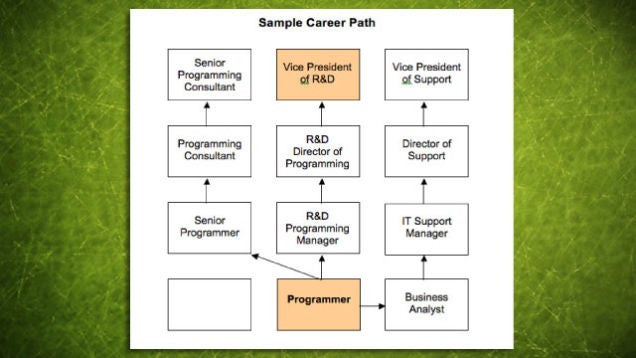
As with most things, your career will benefit if you have goals and a plan for it. Maybe you think you want to be a writer, but the next step after that, is editing. (Do you really want to do that?) Or maybe you want to transition from being an editor to a restaurant owner. (How are you going to get there?) Map out where you want to go, with concrete milestones, as if it were a four-phase project.


четверг, 7 мая 2015 г.

    Work on getting your resume bulked up. In the mean time, do some volunteer work and other jobs which show you building the skills you need for your dream job. Look for positions in the same industry, or even volunteer positions that get you working in that position directly. Even if the experience is more abstract (working at a store to build customer service experience), this can help in the long run and help you get funds to get a better education.
    
   Make friends in the right places. You don't need to go to some Ivy League or join a secret organization. Just meet people connected to that field and get to know them (and let them get to know you). You can volunteer with their organizations, go to conferences in that field, and even just go to a job fair to meet people. Just make sure that you're making a good impression and that they're definitely going to recognize your name.
Try the job on for size. Do an internship, a job shadow, or volunteer in order to see what that career path really looks like on a day-to-day basis. This will help you make sure that you're not romanticizing the job and that you will actually like it. It will also help you meet people who can help you and help you gain vital skills in the field.


These are all that I wanted to say. I think it helped to choose your right and dream career. And I hope you'll choose your dream career. Now here some tests for you. I think it'll help you. Good Luck!!!

  I'm very glad that you were here and I'm very happy to being your friend. I'll hope to see you in my other blogs.
See you soon, my friend!

   Think about what you are or were good at in school. Think about the subjects you excelled in in school. Though it may not be your favorite thing to do, choosing a career based on something you are skilled at can help you excel and provide yourself a secure future.


     Think about the education you will have as you enter a career. It is important to consider what education you already have or will have as you begin pursuing a career. If finances may bar you from pursuing more schooling, you may need to consider what you already have. It may also be necessary to stick with your existing high school or college degree if there are time limitations or other restrictions. If you find that you are limited to jobs relating to the degree you already have, consult with a career counselor to find out what options are available to you.

Consider the upsides and downside of that career. When you consider these more-attainable careers, make sure to do your research. Be well acquainted with what life looks like in that career path. You will need to know what the downsides of those jobs are if you want to make an informed decision.
    Factor in your financial needs. If you're really in a job that fulfills you and makes you happy, getting rich off of it really won't matter to you. However, life is full of obligations that go beyond your happiness. If your dream career can't help feed your family or pay your student loans, you might need to look into other options. However, you should always keep your focus on jobs that provide similar feelings to what makes you happy.
   Take an online job test. If you feel really lost and none of these tricks help you, consider taking an online job test or going in to a local career center to get some advice from professionals. Good online tests can be found easily, but many of the best require a small fee.
    Consider your hobbies. It is very easy to turn your hobbies or something you love doing into a future career. Many hobbies correspond to real world needs and positions. Consider what you like to do and how that might fit into a career.
For example, if you like playing video games, consider becoming a video game designer, programmer, or QA specialist.
  • If you like drawing or art, consider becoming a graphic designer.
  • If you like sports, consider going into teaching and getting certified as a coach


  Consider what you enjoy or enjoyed in school. Academic subjects translate well into future careers but may require more schooling than other types of careers. Your favorite class in high school could very well launch you into your future career but you have to be willing to work for it.
For example, if you loved chemistry, you could look forward to a future career as a lab technician or a pharmacist.
  • If you liked English class, consider becoming an editor or a copywriter.
  • If you enjoyed math, consider becoming an actuary or an accountant


Ask someone if you 
don't know. Sometimes it’s hard for us to see the areas in life where we excel. If you don’t think you’re good at anything, ask your parents, other family members, friends, or teachers what they think you’d be good at. Their ideas might surprise you!
Consider Your Interests

    There is an old saying that if you’re trying to choose a career, you should think about what you would do if you didn’t have to work. If you had a million dollars and you could do anything, what would you do? Your answer to that question, while maybe not literally the best career choice for you, may give you insight into what you should do.
  • If you want to be a music star, consider going into audio engineering or music composition. These careers are easier to pursue and you will be much more likely to succeed and provide for yourself in the future.
  • If you want to be an actor, consider going into media broadcasting. You can get a degree in communications or work your way up the chain of command in a local news or other television studio.
  • If you want to travel the world, consider becoming an airline steward or stewardess. This is a great way to make a living and pursue your dream of traveling the globe.